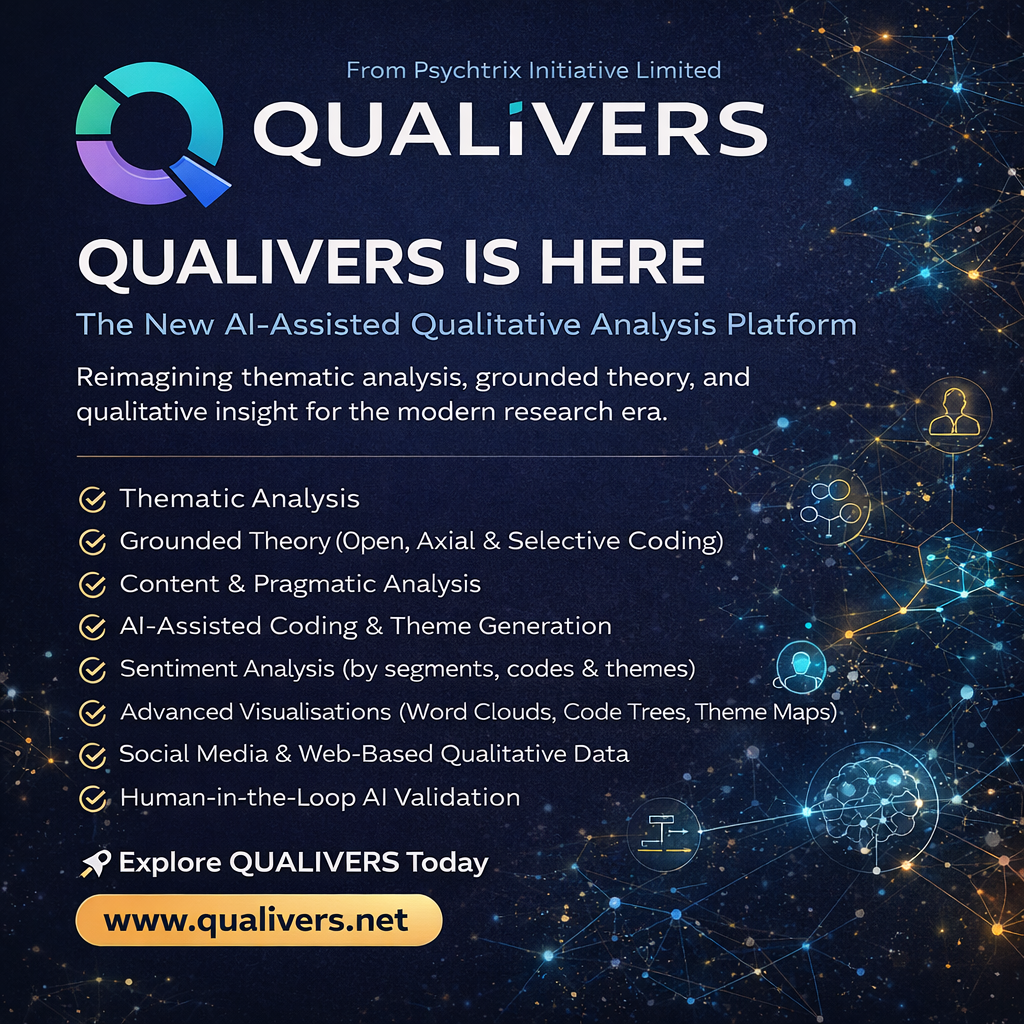
Qualitative research software has evolved steadily over the past three decades. Early tools focused on manual coding and desktop-based data organization, helping researchers move away from paper transcripts and spreadsheets. However, today’s qualitative research environment has changed fundamentally—data are larger, more digital, more collaborative, and increasingly time-sensitive.
This blog post compares Qualivers with other widely used qualitative analysis software and explains why modern researchers need the freedom to analyze data on any internet-connected device.
The Qualitative Software Landscape Today
Several qualitative analysis tools have shaped the field:
- NVivo
- Atlas.ti
- MAXQDA
- Dedoose
These platforms have made important contributions, particularly in manual coding, codebook management, and data organization. However, most were designed in an era when research workflows were desktop-bound, datasets were smaller, and collaboration was slower.

Qualivers was developed to respond to a new qualitative reality.
Feature Orientation: Traditional Tools vs Qualivers
| Capability | Traditional CAQDAS | Qualivers |
| Primary Architecture | Desktop / local install | Fully web-based |
| Device Flexibility | Single machine | Desktop, laptop, tablet |
| Collaboration | Limited / file-based | Real-time & cloud-native |
| AI-Assisted Analysis | Minimal or external | Built-in, transparent |
| Sentiment Analysis | Rare or shallow | Integrated & theme-aware |
| Digital Data Readiness | Partial | Native |
Traditional software excels in controlled, local environments. Qualivers excels in dynamic, connected research ecosystems.
Why Device-Independent Qualitative Analysis Matters
1. Research No Longer Happens in One Place
Modern researchers work across:
- Offices and homes
- Field sites and clinics
- Conferences and classrooms
- Community settings and online spaces
A desktop-only system forces analysis to pause when researchers move. Qualivers enables continuous analytic thinking, wherever insight emerges.
2. Qualitative Insight Is Often Time-Sensitive
In areas such as:
- public health
- crisis response
- policy analysis
- social media monitoring
- program evaluation
Waiting to “return to the lab” delays interpretation. With Qualivers, researchers can review, code, and interpret data in real time, using any device connected to the internet.
3. Teaching and Supervision Demand Flexibility
Supervisors and instructors increasingly:
- review student work remotely
- demonstrate analysis live in class
- provide feedback across institutions
Desktop-bound software restricts pedagogy. Qualivers supports teaching, supervision, and feedback across devices—laptop in class, tablet in seminars, desktop in offices.
4. Collaboration Is Now the Norm, Not the Exception
Large qualitative projects involve:
- multiple researchers
- interdisciplinary teams
- international collaborators
File-based collaboration (sending project files back and forth) introduces version conflicts and analytic fragmentation. Qualivers’ web-native architecture enables shared, synchronized analytic spaces without sacrificing audit trails or rigor.
AI and Analytical Intelligence: A Key Differentiator
While most traditional tools emphasize manual control, Qualivers integrates:
- AI-assisted coding and theme generation
- Human-in-the-loop validation
- Segment- and theme-level sentiment analysis
- Transparent analytic logs
This combination allows researchers to scale their analysis without surrendering interpretive authority.
Visualization Beyond Desktop Constraints
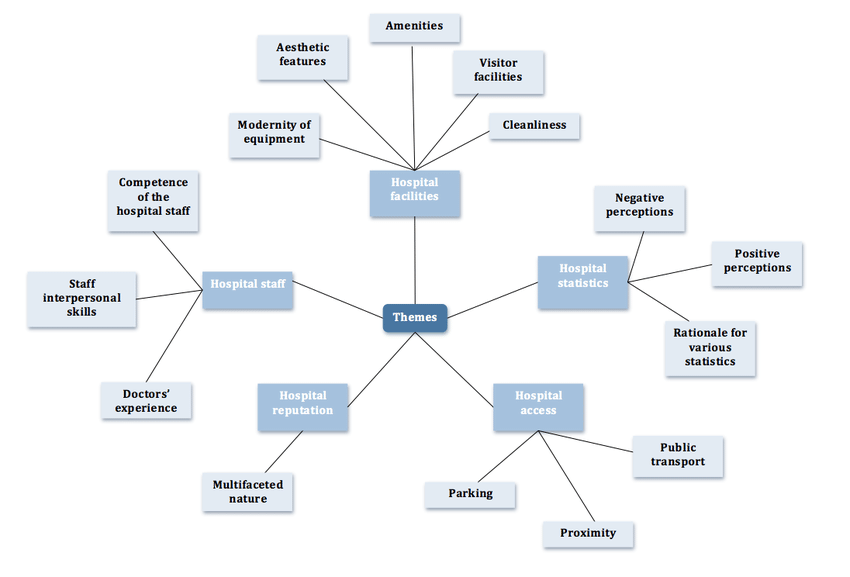
Qualivers’ visualizations—theme maps, code trees, timelines, sentiment trends—are designed to be:
- responsive
- interactive
- interpretable on multiple screen sizes
This enables researchers to think visually whether they are using a large desktop monitor or a tablet during fieldwork.
Effectiveness in Contemporary Research Contexts
| Research Context | Desktop-Only Tools | Qualivers |
| Field-based studies | Constrained | ✔ Flexible |
| Digital ethnography | Limited | ✔ Native |
| Multi-site collaboration | Fragmented | ✔ Integrated |
| Teaching & supervision | Rigid | ✔ Adaptive |
| Rapid reporting | Manual | ✔ Assisted |
Effectiveness today is not only about what features exist, but how easily those features can be used when and where insight occurs.
Why Researchers Should Rethink Their Software Choices
The shift toward device-independent qualitative analysis is not a matter of convenience—it is a matter of research quality and relevance.
Researchers need tools that:
- match the mobility of modern research
- respect qualitative epistemology
- integrate AI responsibly
- support collaboration and teaching
- translate analysis into insight efficiently
Qualivers was designed with these needs at its core.
Conclusion
Traditional qualitative analysis software laid the foundation for systematic coding and organization. However, the future of qualitative research is connected, mobile, collaborative, and analytically augmented.
Qualivers represents this next step—enabling rigorous qualitative analysis anytime, anywhere, on any device, without compromising methodological integrity.
🌐 Explore Qualivers: www.qualivers.net
Qualivers — Where qualitative research meets the realities of a connected world.